Ethics of Fashion in a Late-Stage Capitalist World
The fashion industry is not merely a system of producing garments but a moral landscape shaped by power, distance, and desire. In a late-stage capitalist world, where profit maximization supersedes nearly all other values, fashion is devoid of ethical responsibility. It has diffused production across the Global South, making harm both invisible and normalized. This means that we need to tackle fast fashion head-on since what we wear is not neutral; it is entangled in systems of exploitation, environmental degradation, and ideological control.

And at its core, capitalism is entangled within our moral framework, since it affects human relationships in transactions and reduces value to price. Under this system, clothing can no longer just be understood as protection, cultural expression, or craft, but as a commodity designed for rapid consumption. This shift illuminates ethical dilemmas we participate in that cause harm without directly witnessing it, allowing us to maintain a sense of innocence while benefiting from exploitation.
Philosophically, this raises a central question: what does it mean to act ethically within systems that obscure the consequences of our actions? Traditional ethical frameworks, whether utilitarianism’s focus on minimizing harm or deontology’s emphasis on moral duties, become strained when applied to globalized supply chains.
And if we, as consumers, cannot see the worker who makes our clothes, cannot access transparent information, and are structurally encouraged to prioritize affordability and trendiness, can we meaningfully assign individual moral responsibility?
This is not to absolve consumers, but to situate the context within the broader structure of constrained choice. Late-stage capitalism thrives on what some theorists call “manufactured desire”, which is the continuous creation of wants that feel like needs. It pushes fashion cycles to accelerate, not because human creativity demands it, but because capital requires constant growth in the race to the bottom. Planned obsolescence, micro-trends, and algorithm-driven aesthetics make sure to feed this machine and to curate temporary satisfaction. In this sense, overconsumption is not simply a personal failing; it is a systemic outcome that smells of profit maximization and moral decay.
Alienation and the Loss of Meaning in Fast Fashion
Drawing from Marxist theory, the fashion industry exemplifies alienation, which is the separation of people from the products of their labor, from each other, and from themselves. Garment workers are removed from the final product they create, making pieces they could never afford. Consumers, in turn, are alienated from the labor and materials that make up their clothing.
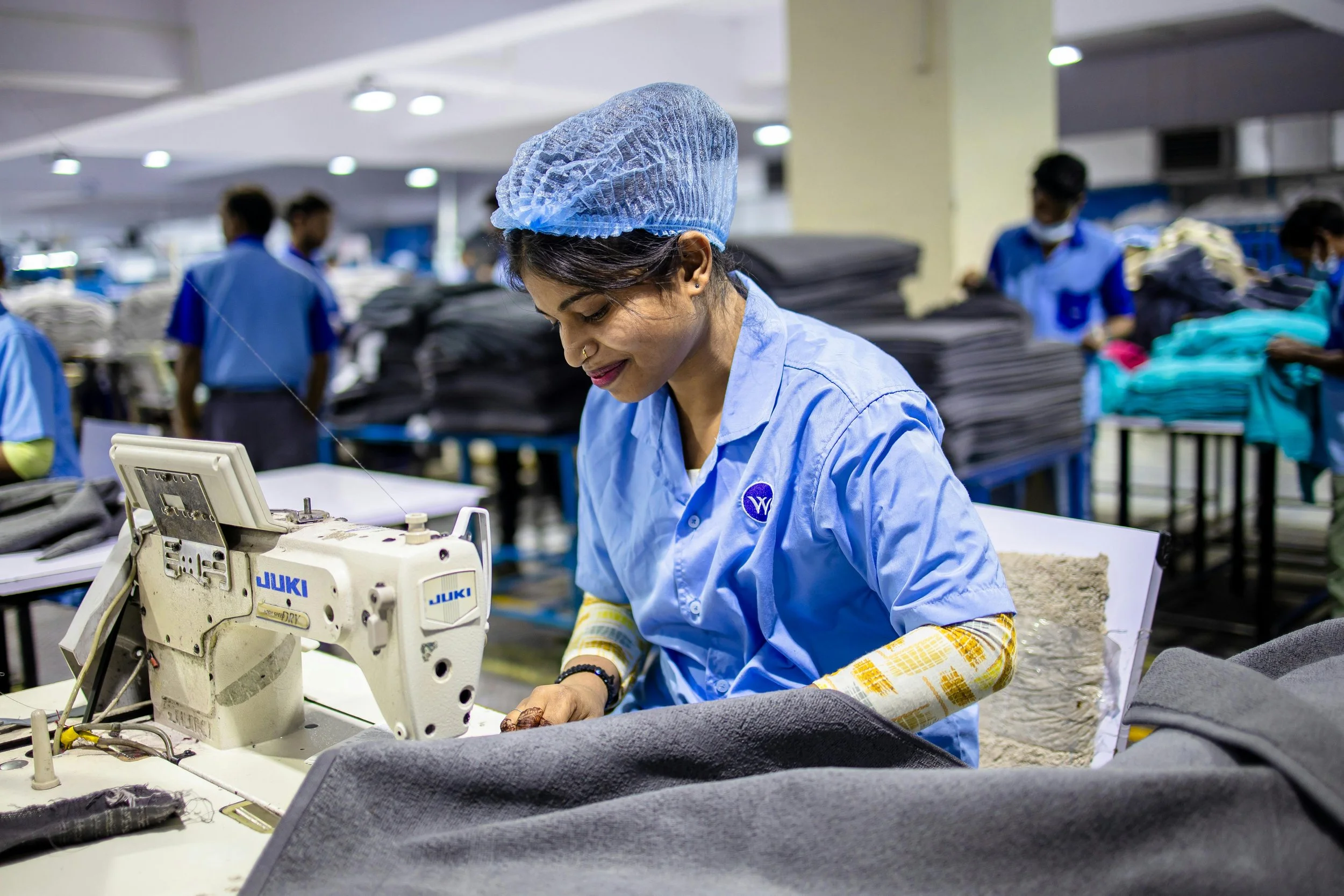
This alienation extends to knowledge, given that we don’t know how clothing is made. Fabrics are described based on how it feels on our skin, while their construction process is hidden, and the skills required to make clothing are devalued. The disappearance of this knowledge is not accidental because it reinforces dependence on corporations and weakens our capacity to make informed, autonomous fashion choices.
Yet, historically, clothing was embedded in community, and skill-sharing through repair, alteration, and reuse in everyday reality. Yet the erosion of these practices represents a move away from care, stewardship, and continuity toward disposability and detachment.
Labor, Exploitation, and Moral Distance in Fast Fashion
The ethical crisis of labor in fashion is often framed in terms of “bad conditions,” but this language can obscure the severity of what is occurring. When workers endure unsafe environments, poverty wages, and coercive contracts, we are not dealing with isolated issues but with systemic exploitation known as modern slavery.
From a philosophical perspective, this challenges liberal notions of “free choice” in the market. If workers are compelled by economic necessity to accept harmful conditions, their consent is not fully voluntary, which illuminates the immorality of the entire system.

Additionally, the geographic separation between consumers in the Global North and workers in the Global South creates what moral distance. This distance is not just physical but psychological, reinforced by branding, marketing, and the absence of transparency.
Environmental Ethics in Fast Fashion
Fashion’s environmental impact introduces another layer of ethical complexity, particularly when viewed through the lens of intergenerational justice. Given our current climate crisis, there has been consideration of having moral obligations to future generations. The industry’s reliance on fossil fuels, water-intensive processes, and chemical pollution imposes long-term costs on ecosystems and communities that are not reflected in the price of clothing.
This disconnect highlights the fundamental failure of capitalist markets that externalize harm on others. The true cost of a garment is not paid at checkout, but by polluted rivers, depleted resources, and communities facing environmental collapse.

This process has been termed waste colonialism since second-hand clothing exported to developing countries overwhelms local systems and economies. It reproduces colonial patterns of extraction and disposal, and it has become a tool of domination, reinforcing global inequalities.
Philosophically, this raises questions about justice beyond the human. Environmental ethics increasingly calls for a multispecies perspective, recognizing that animals, ecosystems, and non-human life have intrinsic value. Fashion’s use of animals, whether for fur, leather, or exotic skins, also forces us to confront competing ethical frameworks.
Consumer Ethics and the Illusion of Choice
Under late-stage capitalism, the idea of the “ethical consumer” is both empowering and misleading. On one hand, individual choices can reflect moral values and contribute to cultural shifts. On the other hand, the focus on consumer responsibility can obscure the role of corporations and governments in shaping the system.
This tension is often described as the attitude-behavior gap: people express concern about ethical issues but struggle to align their actions with their values. This is not simply hypocrisy because it reflects structural barriers such as cost, accessibility, and lack of information.
Moreover, the framing of consumption as an individual ethical action risks reducing politics to lifestyle habits. Buying “better” products does not fundamentally challenge the system that produces harm, but rather continues to operate within it. As a result, ethical consumption can become a form of moral branding rather than systemic change.
Resistance, Reimagination, and Ethical Possibility
Despite these challenges, fashion has also been a site of resistance. Movements like hippie and punk fashion rejected dominant values, using clothing as a form of political expression and critique. We can use these examples and embrace fashion as a medium that can be reclaimed.
The question, then, is not whether ethical fashion is possible, but what kind of ethical framework we are willing to pursue. A purely individualistic approach is insufficient and should require us to shift toward collective responsibility and structural change.

This includes:
Stronger labor protections and the right to unionize
Environmental regulations that hold corporations accountable
Transparency across supply chains
Investment in circular systems like repair, reuse, and recycling
Cultural shifts that revalue creativity over consumption
At a deeper level, it also requires rethinking our relationship to clothing. What if garments were not disposable objects, but companions in our lives? What if fashion were measured not by novelty, but by meaning?
Toward an Ethics Beyond Capitalism
Ultimately, the ethical dilemmas of fashion are inseparable from the broader issues of late-stage capitalism. This is especially so when the system depends on endless growth in a finite world, which will inevitably produce exploitation and ecological harm.
Yet when we imagine an ethical fashion future, it involves imagining alternatives to what currently exists. This does not necessarily mean abandoning everything that exists now, but it does mean challenging the idea that profit should be the primary driver of production.
An ethical fashion system would also prioritize:
Human dignity over efficiency
Ecological balance over growth
Community knowledge over corporate control
Longevity over disposability
The challenge to accomplish this feels impossible, but the opportunity to improve the industry is immense. We must start by interrogating its ethics, which is interrogating the values that shape our world. And that may be the most radical act of all.