Chicago's History in Fashion Production
Chicago’s role in American fashion is often overlooked, yet from its earliest days, garment production in the city was shaped by exploitation, immigrant labor, and political struggle. Long before fashion became synonymous with glamour or creativity, it was built through brutal working conditions, poverty wages, and relentless physical strain imposed on cloakmakers and garment workers. This history reveals fashion not as a neutral industry, but as a deeply political one, where labor, immigration, public health, and resistance collided in crowded shops and sweat-filled rooms. So, to understand Chicago’s fashion industry, we have to confront the human cost that made mass clothing production possible.
The Cloackmakers of chicago
Cloackmakers often made garments for those who could afford the luxuries of life, went to tailors and seamstresses, and bought European creations. In the eighteenth century, single men employed as cloakmakers were able to manage on their meager wages. However, men with families struggled to make ends meet because they had more expenses in comparison to their earnings.
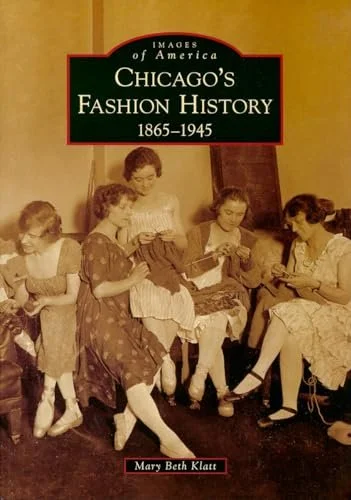
On average, they made $114 each year, about $4 a week, and worked ten hours a day. Yet what they made was not enough to survive on, and they often had to seek support from charitable organizations. They also took out shark loans at incredibly high interest rates, owing money to the butcher, grocer, and usually to the pawnbroker, who charged as much as 416% interest on small loans.
Jews moved in masses to work in the Chicago garment trades and became a fourth of its labor force. They became known as "Columbus tailors" and gradually worked their way up to machine operators.
The Siegels, the Beifelds, the Kuppenheimers, and other large German-Jewish firms employed many immigrants. But as the contracting system developed, it became even simpler to get a job through a friend or relative.
Factories often trapped them indoors all day and deprived them of fresh air. This dampness made their skin susceptible to poisonous dyes from the cheap clothes, and their senses were assaulted by foul odors. They often suffered from malnutrition due to labor-intensive days that required constant speed and physical labor.
And even worse, boys still in development were in conditions so horrible and insufferable that their backs became crooked for life from the continuous work at heavy machines.
18th Century Chicago Garment district
In 1860, the fashion industry became listed in the United States Census, proving its financial prowess. Cloackmakers often found jobs via contracting systems, where contractors acted as mere middlemen who distributed materials to homes and lodgings in neighborhoods. In return, they expected final, completed pieces to be brought back to him.
Home-based garment workers were allowed to work in their living spaces. They used cheap, foot-powered sewing machines that could be bought on installment or rented by the month. However, contractors became greedy and started seeking out the most helpless of the latest arrivals, taking advantage of their ignorance and credulity, and exploiting them to enrich themselves and to keep their victims indefinitely dependent upon their bounty.
Since they made clothing in their homes, workers often got sick from their dirty living conditions and vermin. The most common diseases were diphtheria, scarlet fever, smallpox, and typhoid. Garments also carried these diseases since cloakmakers could take bundles of fabric home to work on. This overlap in work and personal life made contamination unavoidable, and combined with malnutrition, it made the garment trade the shortest of any occupation.
Yet, more strikes emerged in 1886, when working conditions became worse and worse. Chicago even saw hundreds of immigrants swarm DeKoven Street Hall to fight against their work conditions. They went to the streets as rumors emerged that manufacturers were enlarging their inside shops and hiring more "American" girls. This meant fewer bundles for the men who usually got bundles through contractor shops.
These men became incredibly fed up with trying to find work and marched to the Loop, the center of the cloak manufacturing district. They only had a vague idea of why they were to march, and the results they wanted were very unclear. Yet, what united them, despite their nationalities and creeds, was their shared hardship.
Cloakmakers were united by the lack of opportunity in their field.
When they crossed the bridge at Van Buren and Market, they were confronted by police with drawn clubs and were charged. Beating them with their clubs, policemen drove struggling cloakmakers in Chicago back over the bridge. This violence forced them to scatter and go back home to their struggles.
But the following day, after the riot, the Haymarket Riot broke out. Strike workers of the McCormick Reaper Works protested the killing of four peers by the police the day before. They held a meeting, but at the end of it, a large police unit emerged, and a bomb was thrown by an unknown person.
The police began to shoot wildly in all directions, which ended up wounding 67 policemen, killing seven policemen, and wounding two hundred workers.
Cloakmakers grappled with the police violence they faced for standing up for their rights.
Men like August Spies, Albert Parsons, and six others were convicted, without any trace of evidence, of murder. Four were hanged, one committed suicide, two were given life terms, and one was sentenced to 15 years. Many years later, Governor Altgeld, convinced that these men were innocent, pardoned those still alive.
18th century Chicago Factory Worker Rights
By 1893, the Illinois factory inspectors found that it was not unusual for cloak firms to have twenty or more contractors working for them. F. Siegel and Brothers employed such shops, while Joseph Beifeld and Company and Griswold Palmer and Company owned others. Thirteen inside firms controlled a total of 170 outside shops, and there were about 1,800 workers in the contractor shops, twice as large as the labor force of all the inside firms.
It was these larger firms, rather than the contractors themselves, that benefited from contracting. But contractors were at the mercy of the manufacturers and had to underbid each other in fierce competition for the cut bundles. They, in turn, shifted the burden of the industry upon workers and developed the sweatshop to new proportions.
And while girls looked upon their jobs as mere stopgaps until their wedding day, men saw them as a stepping stone to more prosperous vocations. Especially Jewish workers in the contracting shops who often dreamed of becoming independent by becoming a boss contractor or even a manufacturer, or saving enough to enter the real estate or other type of business.
Fashion Union Formation in Chicago
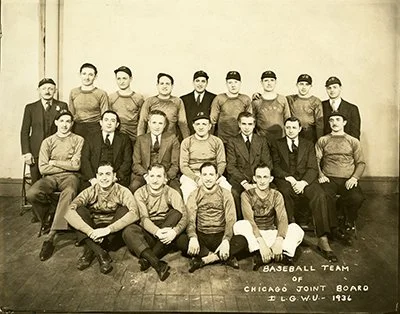
Until the creation of the Chicago Joint Board in 1914 and the winning of the 1915 collective agreement, the Chicago union was not so much a permanent organization as a seasonal union. During the period of price settlements, the union, especially after some victory, experienced an extraordinary boom in membership. After prices were settled, the bulk of the membership immediately disappeared.
In 1909 and 1910, the "Uprising of the 20,000" (1909-1910) was a strike of mostly female shirtwaist makers in New York City that was notable for its size, duration, and support from middle-class women.
The "Great Revolt" of 1910, a strike of mostly male cloakmakers in New York City, was significant for the resulting agreement between the ILGWU and the Cloak, Suit and Skirt Manufacturers' Protective Association. This agreement became known as the Protocol of Peace, which included provisions for the establishment of the Joint Board of Sanitary Control, Committee on Grievances, and a Board of Arbitration, as well as other concessions.
Chicago’s Fall from the Fashion Industry
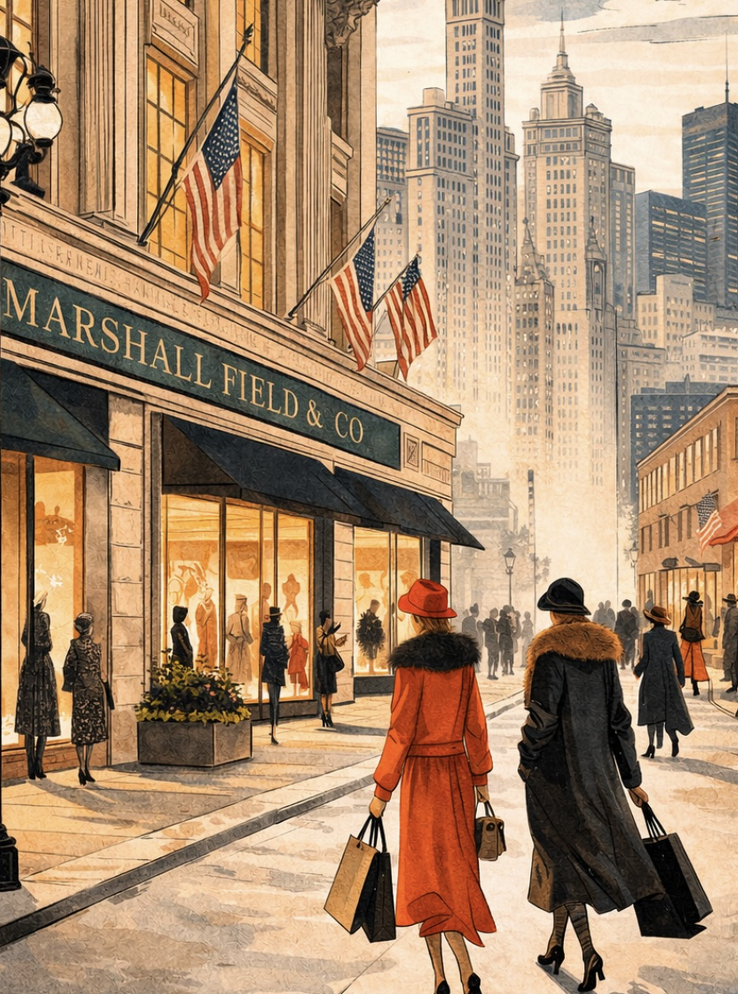
As the fashion industry became increasingly concentrated in a few major fashion capitals, Chicago struggled to maintain its position. New York emerged as the center of American fashion design, media, and luxury retail, while Los Angeles benefited from its connections to Hollywood, celebrity culture, and entertainment-driven trends. Chicago, by contrast, remained primarily known for its manufacturing, transportation, and commercial industries rather than its influence on fashion and culture.
The decline of domestic garment manufacturing further weakened Chicago's fashion sector. As production moved overseas in search of lower labor costs during the late twentieth century, many local manufacturers closed or relocated.
Without a strong concentration of designers, fashion media, luxury consumers, or entertainment industries to support growth, Chicago gradually lost its significance within the national fashion landscape.
While the city continues to support independent designers, retailers, and fashion-related events, it no longer serves as a major center of the American fashion industry.