How To Host A Clothing Swap In Your Community
It is often difficult to know precisely where to begin when hosting a clothing swap for the first time. This difficulty arises from the myriad logistical questions that present themselves, from venue selection to guest management. Yet the truth is that the entire process is far more straightforward than it initially appears. This blog post will guide you through everything you need to know to organize your very first swap. It will also cover the critical pitfalls to avoid. This is especially important when we consider the staggering environmental reality that so many garments are produced and subsequently discarded each year.
The fashion industry alone accounts for somewhere between 2% and 8% of global greenhouse gas emissions.
That statistic makes fashion the third-most destructive industry on the planet, trailing only food and construction. We must also make room for the uncomfortable human cost of our clothing. About 93% of fashion brands fail to pay their garment workers a living wage. At the same time, the vast majority of those same workers endure unsafe, often hazardous working conditions. This means that when you decide to host a clothing swap, you are not merely throwing a casual get-together. Instead, by hosting a swap, you are positioning yourself as a proactive agent of systemic change within the fashion industry.

You will directly support garments in remaining useful circulation for far longer than they otherwise would by keeping those garments out of overflowing landfills. Simultaneously, you will help your friends and your broader community redirect their spending away from fast-fashion brands that consistently place corporate profits above both people and the planet.
Starting a Clothing Swap: Preparation and Mindset
You must be ready to accept that you will not have all the answers before you begin. One example of an unpredictable question is exactly what kinds of items attendees will bring to your swap. You can mitigate this by communicating clearly and in advance about what types of clothing and accessories people should ideally donate.
Figuring out your operational strategy will also mean making firm decisions about which items you will politely turn away. It will also entail deciding how many participants you realistically want to show up. Therefore, take the time to choose a time and place that will naturally bring the ideal crowd together.

Yet a huge factor in the overall success of your event is the setup itself. The setup should ideally be accessible to a wide range of people.
You can experiment with hosting at any of the following locations:
your own apartment or home
local coffee shops or breweries that are open to community events
small boutiques or vintage stores that might be interested in partnering
schools or universities with available common space
community markets and outdoor spaces when the weather permits
As you are thinking about a location, make sure to consider who your target audience actually is. Consider whether you want a collaborator or co-host for the event. Consider how many people you genuinely hope will attend. Keep in mind that you can always expand the swap to include more than just clothes, such as shoes, purses, scarves, and even jewelry. It is also wise to bring a modest selection of your own clothing to start the swap. You never truly know how much or what quality of items people will bring. This is particularly important for those who arrive right at the beginning, when the selection might otherwise be sparse.
Creating Atmosphere and Establishing Rules
Creating a welcoming, comfortable ambiance is tremendously helpful for letting people have more fun. It also helps them feel as though they can take their time browsing through the items without pressure. You will also need to decide in advance how many items each person will be allowed to take home.
Consider placing a limit per hour or for the entire event. A good example is the one-for-one rule, meaning each attendee receives a free item for every item they donate. But many swaps have used a form of 'currency' to track this one-for-one shopping more precisely. For example, if someone brings in ten items to swap, they will receive ten tickets or coins to shop with. If you have many helpers or volunteers, this ticketed process might be a good fit for you and create a more structured, profitable event.
However, you can always host an open swap based entirely on a trust system. In this model, you do need to mind how many items people take. This is a much easier route to take because you will not need many helpers. You also will not have to worry about tracking individuals or preparing tickets and coins for the event.

Another option is the fundraising route by letting people "shop the swap" after paying a small fee to participate. If you are having a paid Shop the Swap, make sure you have a reliable way to take payments. Alternatively, have plenty of cash on hand to make change for those who prefer to pay in person.
Essential Tools and Organizational Aids
You should also consider how you will keep track of the physical inventory and logistical support you will need to host a successful clothing swap. For example, you can bring plastic bags for people to carry their finds. You can bring flyers and signs to help control how people navigate the space. You will also need tables, storage bins, clothing racks, hangers, and most critically, a mirror.
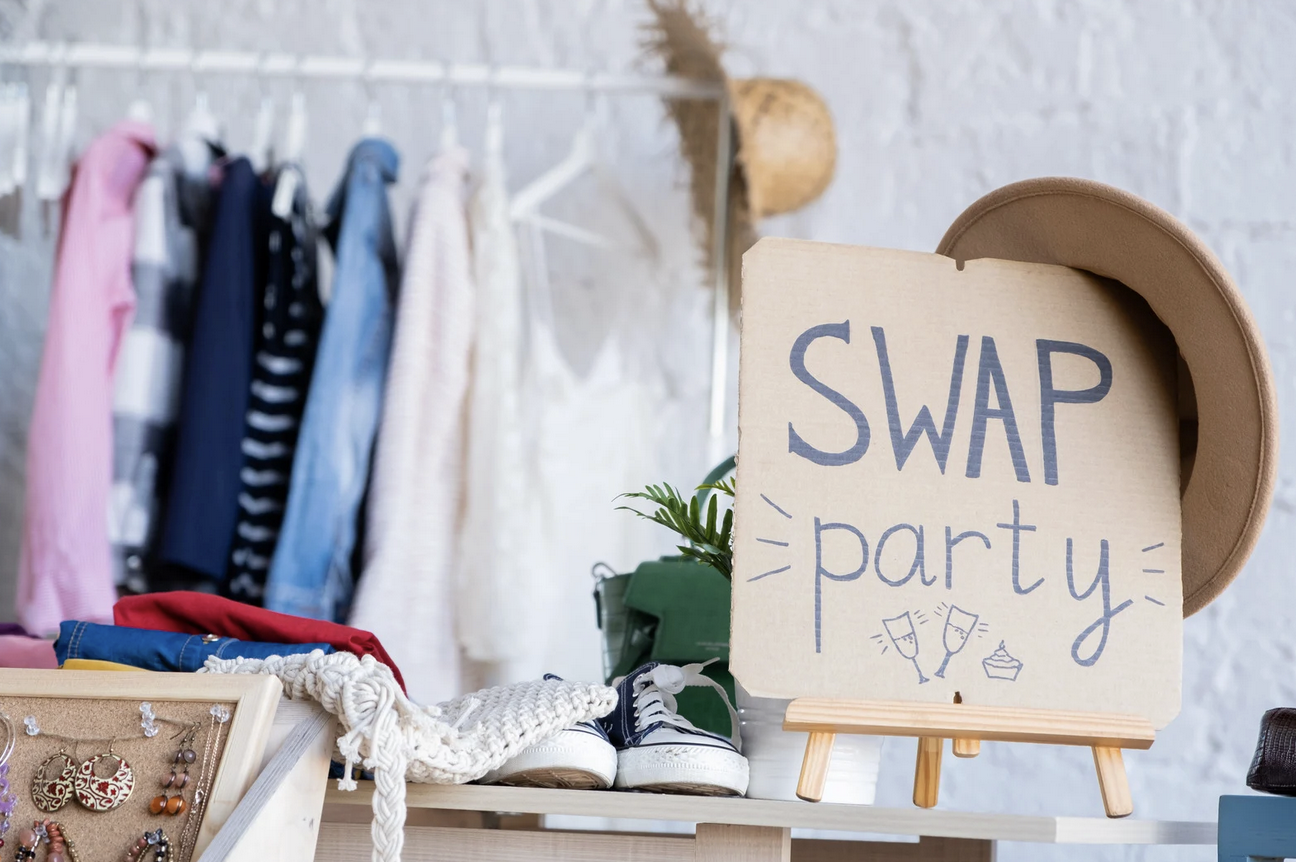
The mirror helps people see how items look on their bodies rather than forcing them to squint at wrinkled piles on the floor. Do not forget to bring your laptop to track sign-ins.
Bring a portable speaker connected to your phone so that you can play background music. You should absolutely recruit volunteers to help you, since doing all of this entirely alone can be overwhelming and exhausting.
Also, consider creating an Eventbrite or other ticketing page as an easy way for you to know exactly how many people are planning to attend your swap. It also allows you to charge for tickets or accept donations.
These event platforms conveniently collect contact information like email addresses. This means you can connect with interested attendees after your event is over. Interestingly enough, many organizers have found that charging even a small amount for a ticket actually increases event attendance. This may be because people feel more committed when they have invested a little money.
Marketing Your Swap to a Diverse Crowd
Invite a diverse group of people by sharing your event with your community of friends, coworkers, or classmates. Remember that the goal is to invite a large enough group to help ensure that there will be a wide variety of sizes and styles represented.
You can achieve this through multiple channels:
Bring friends who will spread the word organically
Use social media platforms to reach different demographics
Engage in community outreach to local organizations.
Make eye-catching flyers to post in busy public spaces.
Place notices in local newspapers.
Add your event to community newsletters.
Run small giveaways to generate excitement.
Planning the Flow and Layout of the Swap
The more organized and easily accessible the clothes are, the more people will enjoy their time shopping. Therefore, think carefully about clothing racks, extra hangers, and ample space for neatly draped clothes. Try to avoid the temptation of keeping everything folded, because items will be touched constantly, and folding will quickly devolve into chaos. Sorting by style is far more preferable than sorting by size.
Style categories include workout, lounge, work pants, work dresses, denim, and so on. Sorting by size is problematic, especially given the extreme variances in sizing from one brand to another, where a size 8 in one label might be a size 12 in another.

You should also bring stands or trays for small accessories like jewelry, scarves, purses, and shoes. I also like to bring snacks, drinks, music, and even flowers. These touches are entirely optional and dependent on your budget, but they do contribute significantly to the festive atmosphere.
Also, be prepared to have a clearly labeled "to be recycled" box placed near the entrance. This box is for people to sort items with stains, tears, missing buttons, broken zippers, or other damage that renders the clothing beyond reasonable wear. Even people with the best of intentions may not always know what is appropriate to donate, despite having the best flyers and social media posts explaining your guidelines.
Cleaning Up a Clothing Swap: The Final Step
At the end of the swap, make sure to announce to all remaining guests that any leftover clothing can either be reclaimed by its original owner if they want it back. Alternatively, it can be left behind to be taken to a local charity that is in genuine need of those items. You should expect that almost every clothing swap will have some items left over at the conclusion of the event.
In order to make this final cleanup step as easy as possible for you and your event team, find a clothing collection partner before the event even takes place. This partner could be local unhoused shelters, women's shelters, local thrift stores with a mission you support, university clothing closets for students in need, or other similar organizations.
Make sure to ask whether they are able to pick up all the leftovers directly from your event space at the end of the night. Doing so will dramatically minimize your workload and let you know you have completed a successful clothing swap!